

Marginalised communities must be portrayed with dignity: Dr. Biju
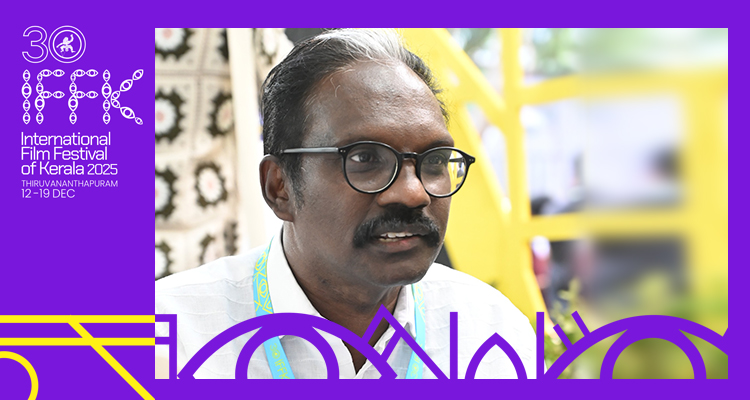
As part of the 30th IFFK, Dr. Bijukumar Damodaran’s Papa Buka was screened, after which the director shared his experiences and creative insights into the making of the film.
Question: Why did you choose the events in Papua New Guinea as the backdrop for a story set during the Second World War?
Answer: During World War II, many Indian soldiers served with the British Army in Papua New Guinea. Several fought bravely and were martyred, with many unidentified and buried in protected sites. These lesser-known chapters of the war deserve to be documented and brought to light.
Question: As a director, what is your approach to storytelling when dealing with complex and emotionally layered characters?
Answer: I always present my characters in a minimalist manner. In this film, the characters are deeply shaped by their surroundings and history. I developed them through extensive geographical and cultural research, and then structured their dialogues and behaviour according to the demands of the narrative.
Question: Many of your films portray distinctive characters deeply rooted in their native cultures. Could you elaborate on your process for developing such characters?
Answer: Portraying characters deeply rooted in their native cultures is essential to maintaining narrative authenticity. As a filmmaker, I consider it my responsibility to represent characters without distortion or artifice. Even when they are fictional, every character carries an inherent dignity. In the past, stories of marginalised communities were often depicted in reductive or demeaning ways. Their lives, struggles, and lived realities deserve to be presented with respect and integrity, for at the core, we are all human beings.
Question: How do you integrate personal experiences and social critique in your films?
Answer: It is a conscious approach. The social critique in my films stems from my commitment and responsibility towards society. I place greater faith in the social relevance of art rather than seeing cinema purely as entertainment or an aesthetic pursuit.
Question: How do you integrate personal experiences and social critique into your films?
Answer: It is a a deliberate and conscious approach. The social critique present in my films emerges from a sense of commitment and responsibility toward society. I place greater emphasis on the social relevance of art, rather than viewing cinema solely as a form of entertainment or an aesthetic exercise.
Question: What message would you like to share with the new generation of filmmakers entering the industry?
Answer: Self-confidence is the most essential quality a director must cultivate. Filmmakers should present their ideas with a deep respect for the society they inhabit. Use cinema as a political and experimental medium, as this, I believe, is the true path to meaningful filmmaking.
Download Mobile Apps: